To get rid of a large collection of books and paper, shred anything with personal or financial information first, offer books in good condition to a school, charity or library group, and recycle the ones that are worn out. What is left, the boxes, the bookcases and the file cabinets, a two-person crew can carry out in one visit.
Books are easy to underestimate. One shelf is nothing. A study lined floor to ceiling, a closet full of banker's boxes and a garage wall of old paperwork is a different job, and it is almost always heavier than it looks. We get these calls most often during a downsizing, after a death in the family, or when someone is turning a study into a bedroom or an office.
Start with the paper that has your name on it
Before anything else leaves the house, sort out the papers that carry personal information. Old tax returns, bank and brokerage statements, medical bills, pay stubs, and anything with a Social Security or account number.
The FTC's guidance on protecting yourself from identity theft is plain about it: when you decide to get rid of documents with personal or financial information, shred them before you throw them away. If you do not own a shredder, it suggests looking for a local shred day in your community.
We are not a document destruction service, and we will not pretend otherwise. Anything sensitive should be shredded or taken to a shred event before the pickup day. Once the paper is shredded or cleared, the empty file cabinets and boxes are ours to carry.
This matters most in an estate. Parents who kept every statement for forty years left a lot of it in filing cabinets, and the family is the one who has to go through it. Our estate cleanout checklist covers where the paperwork fits into the order of a whole house. On estate jobs, we work at whatever pace the family needs.
Where the books can go
If the books are in good condition, try donating them first. The EPA's page on recycling common household items says schools, places of faith, charities and non-profits will often accept book donations, and that books too worn to donate can be recycled. Paperbacks can go as they are, and hardcovers need the cover removed first.
Be ready for a no on some of it. Old encyclopedia sets, outdated textbooks, water-stained paperbacks and years of magazines are hard for anyone to place. It is worth asking, but do not plan the week around a donation center taking forty boxes.
Paper is one of the materials that gets recycled the most. According to the EPA's paper and paperboard data, about 46 million tons of paper and paperboard were recycled in 2018, a recycling rate of 68.2 percent, the highest of any material in municipal solid waste. That is a good reason to keep old paper out of the trash when you can.
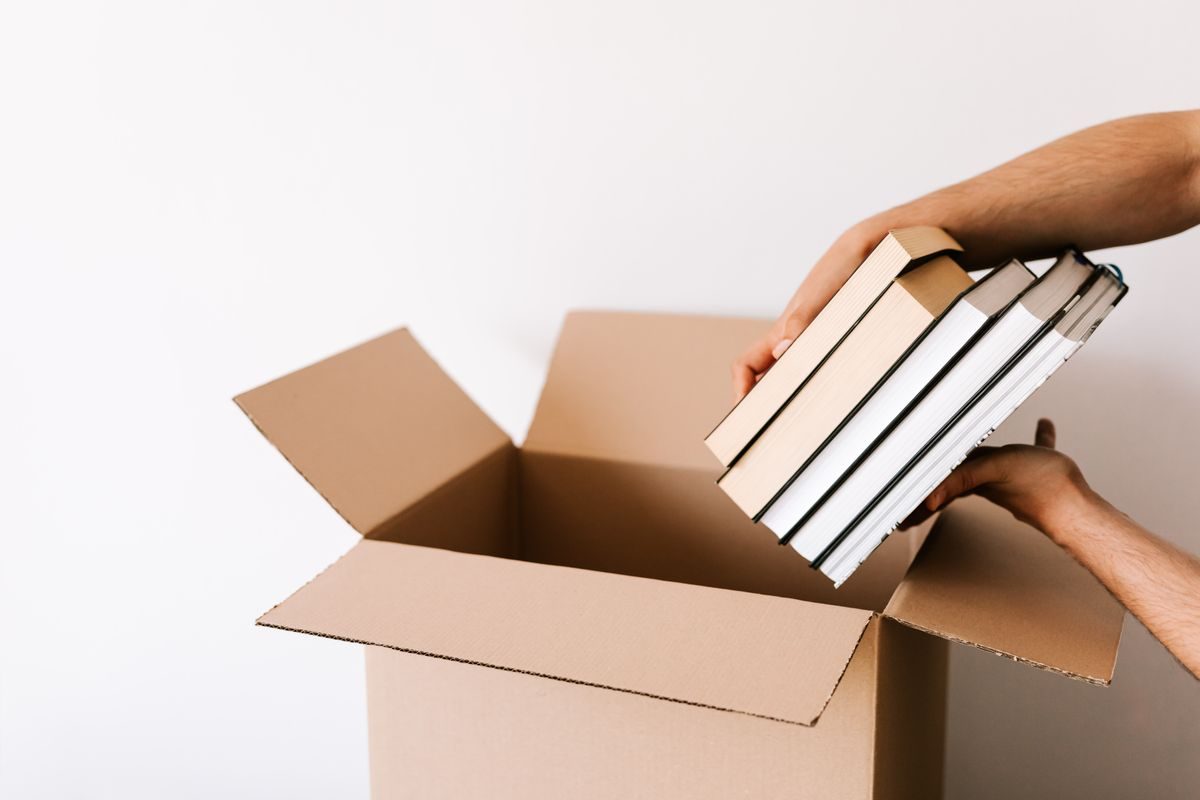
Do not overfill the boxes. A large box packed full of books is hard to lift and tends to split at the bottom halfway down the stairs. If you are boxing books yourself before we come, use smaller boxes and fill them only part of the way. If you would rather leave the books on the shelves, tell us, and we plan for the packing time.
The bookcases themselves
Once the books are off, the bookcases are ordinary furniture, with a few catches.
- Built-in bookcases are part of the house. We do not tear out built-ins. If they are coming out as part of a remodel, that is a carpenter's job, and we haul the pieces once they are down.
- Tall freestanding bookcases are often anchored to the wall with a strap or bracket, which is how they should be. Point it out and we unscrew it before anything tips.
- Particleboard bookcases tend to sag and come apart at the joints once they are moved. Solid wood ones are the pieces worth offering to a donation center, and Habitat for Humanity ReStores take gently used furniture and household goods, with each store setting its own list.
Bookcases usually leave alongside a desk, a filing cabinet and an office chair. Our post on home office furniture after going back to the office covers that side of the room.
What we haul on a books and paper job
On a typical study or library clear-out, we take:
- boxes of books the family has decided to let go, once donations have been sorted out
- freestanding bookcases, shelving units and the desk
- empty file cabinets and banker's boxes, after anything sensitive has been shredded or removed
- magazines, old catalogs and loose paper that is not personal
- the rug, the reading chair and the lamp if they are going too
We do the lifting and the carrying, and we look at the path out before anything moves. Metal file cabinets go to recyclers, cardboard and paper go to recycling where they can, and usable furniture goes to local donation partners. Our stated goal is to keep more than half of every load out of the landfill.
Around Lewisville Lake, a lot of these calls start as shelving and a desk coming out of a spare room in The Colony, and the wider junk removal page for The Colony covers how we work there. Further south, we also handle furniture removal across Dallas. If the books are part of moving a parent somewhere smaller, our post on downsizing a parent into assisted living walks through the order that tends to work.
How the pickup runs
Send us a photo of the shelves, the boxes and anything else leaving the room. Tell us if the books are on a second floor or in an attic, and whether they are boxed or still on the shelves.
A crew looks at what is going and gives you a firm number before anything is loaded. The quote is the bill, and disposal is included. We are affordable and priced fair, based on how much there is to take. These are our own crews, not gig labor.
Call before noon and same afternoon is typical across the northern suburbs. When you are ready, tell us what needs to go or read more about how our furniture removal works.
Frequently asked questions
Do you shred documents?
No. We are not a document destruction service. Shred anything with personal or financial information yourself, or take it to a local shred day, before the pickup.
Do the books need to be boxed before you come?
It helps, but it is not required. Tell us if they are still on the shelves so the crew can plan for the packing time.
Will you take a built-in bookcase?
We do not remove built-ins. Once a carpenter or your remodeler has taken them down, we can haul the pieces.
Can old books be recycled?
Yes, if they are too worn to donate. Paperbacks can be recycled as they are, and hardcovers need the cover removed first.
Will you take the empty filing cabinets?
Yes. Metal file cabinets go to recyclers. Please make sure every drawer is empty of personal papers first.
A room full of books was a lot of years of reading. When it is time for the room to be something else, the shelves and the boxes can leave in one visit.