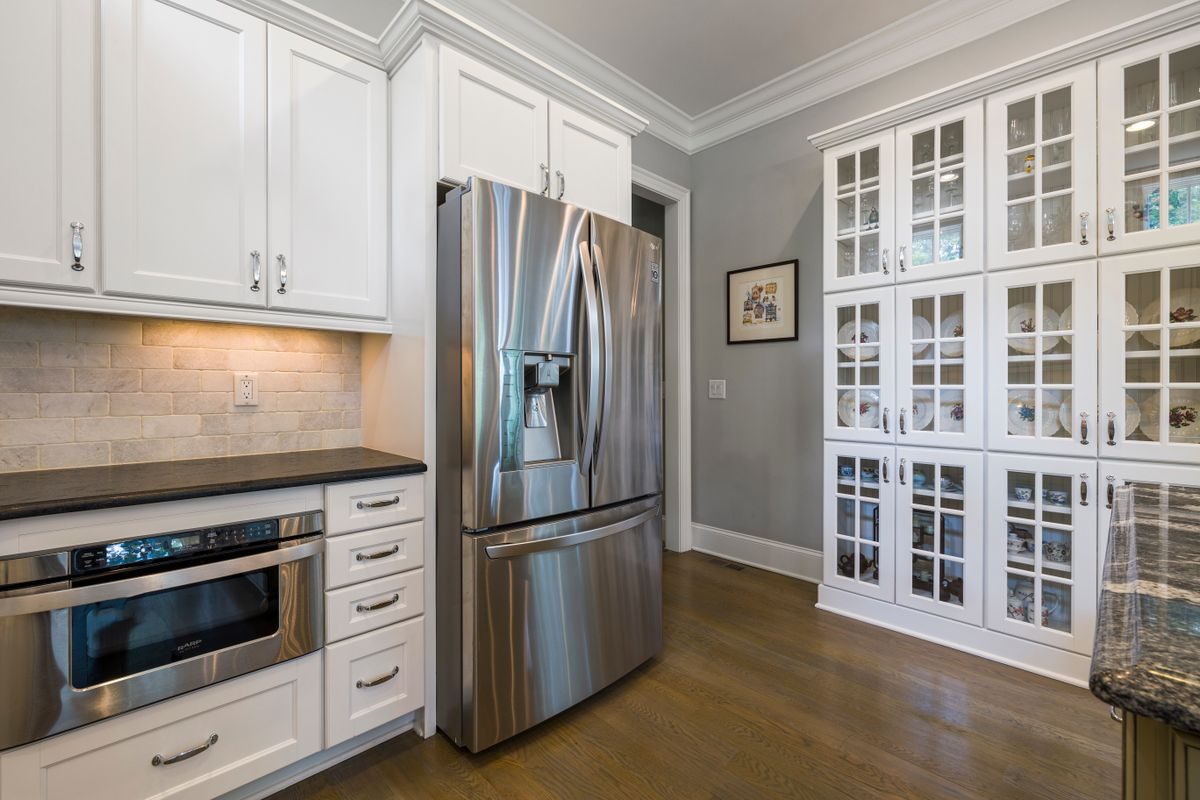
After a kitchen remodel, the leftovers are usually the old cabinet boxes and doors, the old refrigerator, range, dishwasher and microwave, a sink, and a pile of cardboard from the new appliances. Solid cabinets and working appliances can go to a donation center first. What is left, a two-person crew can carry out in one visit.
The new kitchen gets the photos. The old one ends up in the garage, on the side yard, or stacked against the fence, and it tends to stay there for weeks. Most of the calls we get for this come a few days after the contractor finishes, when the homeowner realizes the old kitchen did not leave with the crew.
What the contractor usually takes and what they leave
It depends on the contract, so read yours before you assume anything.
Some remodelers haul all of their own demolition debris and leave you nothing. Others take the drywall, the flooring and the scraps, but leave the cabinets and appliances because the homeowner said they might want them. And some jobs are split: the homeowner hired a cabinet installer, a countertop shop and an appliance store separately, and none of them took the old stuff because each one assumed somebody else would.
The piles we see most often after a kitchen job:
- Upper and lower cabinet boxes, usually with the doors and drawer fronts stacked separately
- The old appliances: refrigerator, range or cooktop, wall oven, dishwasher, over-the-range microwave, sometimes a trash compactor
- The sink and faucet, and the old garbage disposal
- Cardboard, foam and wood crating from the new appliances
- Light fixtures, a ceiling fan, a range hood and the odd length of trim
Can old kitchen cabinets be reused or donated?
Often, yes, if they came out whole. Solid wood cabinets that were unscrewed from the wall rather than pried off are the ones worth trying to place.
Habitat for Humanity ReStores accept new and gently used appliances, furniture and building materials, and cabinets fall under building materials at many locations. Each store sets its own list, so call or check before loading anything. Particleboard cabinets with swollen bottoms from years of a leaking sink are the usual no.
Some people keep a run of the old uppers for the garage. That works well when the boxes are sound. Our post on garage shelving and workbench removal covers the other end of that story, when those same garage cabinets finally have to come down.
Tell us what is dense before we come. Stone countertop pieces, tile, and any leftover masonry are handled differently from cabinets and appliances. Mention them in your photo or message so the crew plans for them and your quote covers the whole pile, not just the part that is easy to see.
What happens to the old refrigerator
The refrigerator is the one piece with real rules attached. Fridges, freezers and window air units still hold refrigerant when they are thrown out. Under the EPA's safe disposal requirements for refrigerated appliances, the final person in the disposal chain, such as a scrap metal recycler, is responsible for making sure that refrigerant is recovered before the appliance is finally disposed of.
That is why an old fridge should not just be left at the curb and forgotten. We carry refrigerant-holding units to recyclers who handle that step, and working units in good condition go to local donation partners first. Our guide to appliance and electronics disposal in North Texas covers the other appliances in more detail.
If the range is gas, it needs to be disconnected and the line capped by a licensed plumber before anyone moves it, and a hardwired cooktop or wall oven needs an electrician. We handle the simple disconnections on the spot and take it from there once that step is done. It is the same routine we follow when hauling a dead refrigerator out of a Wylie kitchen or a garage freezer anywhere else we work.
Where the rest of it goes
Cardboard from the new appliances is recyclable, and there is usually a lot of it. Flatten what you can, and whatever does not fit in your recycling cart can go on our truck.
Kitchen demolition is a small part of a much bigger waste stream. The EPA's construction and demolition materials data put C&D debris at 600 million tons generated in the United States in 2018, with just under 145 million tons sent to landfills. Metal from old appliances and fixtures goes to recyclers. Usable pieces go to donation where they will take them, and our stated goal is to keep more than half of every load out of the landfill.
What stays behind
We do not take household hazardous waste, and a kitchen remodel produces some. Half-used cans of paint and primer, adhesives, caulk, solvents and cleaning products all go to your city's program instead. In Plano that is the household chemical collection service, and most DFW cities run something similar at no charge.
If the remodel also meant new floors, the old carpet and pad are their own pile. Our post on old carpet and pad after a flooring install covers that one.
How the pickup runs
Send us a photo of what is left, wherever it is sitting. Tell us if anything is still connected, and whether the old fridge is still running.
A crew looks at everything that is going and gives you a firm number before anything is loaded. The quote is the bill, and disposal is included. We are affordable and priced fair, based on how much there is to take. You point, we carry, we sweep. These are our own crews, not gig labor.
Calls come from all over the northern suburbs. If you are in Wylie, the Wylie junk removal page covers how we work there, and in Dallas we also do appliance pickup across the city. Call before noon and same afternoon is typical. When you are ready, tell us what needs to go or read more about how our appliance removal works.
Frequently asked questions
Will you take kitchen cabinets that are still on the wall?
We haul cabinets once they are off the wall. Removing cabinets that are still installed is a job for your remodeler or a handyman, because it can involve plumbing, electrical and countertops that are still attached.
Do you take the old refrigerator even if it still works?
Yes. A working fridge in good shape goes to local donation partners first. One that does not work goes to a recycler that handles the refrigerant.
Can you disconnect my gas range?
No. A gas line has to be capped by a licensed plumber before the range is moved. Once that is done, we carry it out.
Will you take the leftover paint and adhesive?
No. Paint, primer, adhesives and solvents are household hazardous waste. Take them to your city's household chemical collection program.
Can you take the appliance boxes and packing foam too?
Yes. Cardboard, foam and wood crating from the new appliances can all go on the same pickup.
The new kitchen is the point of the whole project. The old one can leave in a single visit.