When new windows or doors go in, first ask your installer whether hauling the old units is already part of the contract. If it is not, keep old painted frames intact, tape any cracked glass, and stand the units upright against a wall. A crew can then carry out the old windows, patio doors, storm doors and screens in one visit.
Replacement day usually goes like this. The installers pull the old units, set the new ones, clean up the openings, and leave. Then, a day or a week later, someone notices that the old windows are leaning against the garage wall, the old patio door is lying across the side yard, and there is a pile of screens, blinds and trim behind the fence. This post covers what to check before any of it moves and what our crew takes away.
Ask the installer first
Many window and door installers include removal of the old units in their price. Some only take them if you ask, and some leave them on purpose because the homeowner wanted to keep a door or two. Before you book anyone to haul them, read the contract or call the company that did the install.
If haul-away is in there, that is the free option, and you should use it. We would rather tell you the truth and lose the small job than take money you did not have to spend. If it is not included, or the old units have been sitting in the garage since last spring, that is where we come in. The same goes for a replacement that was part of a bigger project. Our posts on kitchen remodel leftovers and the old vanity, tub and toilet after a bathroom remodel cover what else tends to pile up around the same time.
Old paint on old frames: leave it alone
If your house was built before 1978, the old window frames and door jambs may carry lead-based paint. The EPA's page on sources of lead in the home explains that surfaces that rub together, like windows and doors, are among the places old paint chips and turns to dust. Intact paint is much less of a concern than paint that is scraped, sanded or broken up.
So the simple rule is to leave the old units whole. Do not sand them, scrape them or break them apart to make them easier to bag. If you are doing any of the removal work yourself in an older house, the EPA's guide for do-it-yourselfers in pre-1978 homes covers lead-safe work practices, and it recommends hiring a lead-safe certified contractor for renovation in those homes. That is a job for the renovation contractor. Ours is carrying the finished pieces out.
Check the frames before they go. Old windows and doors collect things people want back: a spare key left on top of a door frame, a mail slot with letters still inside, a pet door insert, a measuring tape the installer left behind, or the warranty paperwork taped to a new unit's packaging. Look over every piece before the crew carries it out.
Glass, screens and the pieces around them
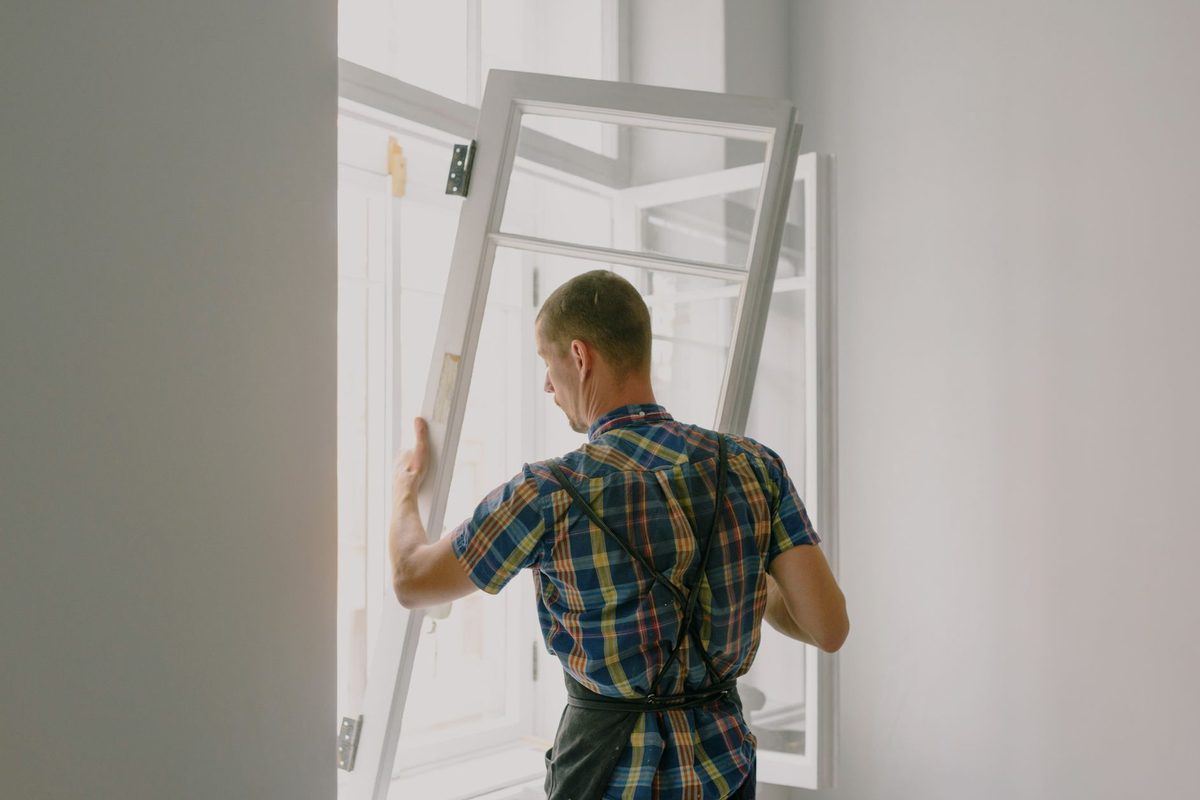
Old windows are heavy for their size, and the glass is the part that breaks. Before pickup, run tape in an X across any cracked or broken panes so the glass stays in the frame, and stand the units upright against a wall instead of stacking them flat. That keeps the next person who picks them up, whether it is you or our crew, from finding a broken pane the hard way.
Pull together the smaller pieces that came off with the windows and doors: screens, blinds and shades, curtain rods, old trim and casing, door hardware, weatherstripping, and the packaging the new units arrived in. All of that can go in the same load. Old storm doors, screen doors and sliding patio doors come out the same way, and a long slider panel is easier to carry through a garage or a side gate than through the house.
Loose glass from a window that shattered during removal is different. Sweep it up, wrap it in heavy cardboard or a sturdy box, and label it so nobody reaches in bare-handed. Our guide to what junk removal will and will not take covers the short list of things that stay behind, and if the old units are buried in a garage that needs a wider clear-out, our post on the garage cleanout checklist walks through it.
Reuse, recycling and the city's bulk pickup
Old windows and doors in good shape do not always have to go to a landfill. Solid wood doors, a working storm door or a set of matching windows can be useful to someone doing their own project. The EPA's page on construction and demolition materials lists doors and windows among the building components that can be salvaged and reused. A Habitat for Humanity ReStore sells donated home goods and building materials, though each location decides what it accepts, so check with your nearest store first.
City bulk collection is the other option to check. Rules on construction materials vary by city, and some lists are short. Plano, for example, publishes the items its bulky waste collection accepts, and it is worth reading before you drag anything to the curb. When the pile does not fit the city's rules or its schedule, our post on what to do when the city skipped the pile covers that situation. Where the rest goes after we load it is covered in where your junk goes after pickup. Our stated goal is to keep more than half of every load out of the landfill.
What we haul after a window or door replacement
On a typical pickup after a replacement, we take:
- old windows of any style, single or double pane, wood, vinyl or aluminum
- sliding patio doors, French doors and old entry doors
- storm doors, screen doors and loose window screens
- blinds, shades, curtain rods and old trim
- door frames and casing that came out whole
- packaging, cardboard and foam from the new units
- whatever else has been leaning against the garage wall since the install
Clearing a path to every window before install day often turns up furniture people are done with, like the couch that sat under the front window for years. That can go on the same load, the same way we handle hauling a worn couch out of a Carrollton living room.
What stays behind: paint cans, caulk tubes, sealant and solvents left over from the job. Those go to your city's household chemical program. Plano residents, for example, can use the city's household chemical collection service.
How the pickup runs
Send us a photo of the old units and tell us where they are: the garage, the side yard, the back patio, or still inside the house. Mention anything awkward, like a long slider panel or a stack of windows behind a locked gate. A crew looks at what you have and gives you a firm number before anything is loaded. The quote is the bill, and disposal is included. We are affordable and priced fair, based on how much there is to take.
You point, we carry, we sweep. These are our own crews, not gig labor. We do a lot of this work in older Dallas houses where the windows are being replaced for the first time in decades, and in Carrollton neighborhoods where the alley gets us right to the back gate. Call before noon and same afternoon is typical across the northern suburbs. When the old units are standing and the glass is taped, tell us what needs to go, or see how our garage cleanouts work if the garage needs more than that.
Frequently asked questions
Will you take old windows with the glass still in them?
Yes. Leave the glass in the frame and tape an X across any cracked panes. The crew carries the units out whole.
My house is older. Is there anything I should do before pickup?
Leave old painted frames and doors intact. Do not sand, scrape or break them apart. The EPA has guidance on lead-based paint in homes built before 1978.
Do you take sliding patio doors and storm doors?
Yes. Sliders, French doors, entry doors, storm doors and screen doors all come out with the rest of the load.
Should I check with my installer first?
Yes. Many installers include removal of the old units. If yours does, use it. If not, we can carry them out.
Do you take the leftover caulk and paint?
No. Paint, caulk, sealant and solvents go to your city's household chemical collection program. We can point you to it.
Ask the installer, leave the old paint alone, tape the glass, and stand everything up. Then let the crew carry it out and give you the garage back.